

In todayтАЩs digital age, mobile phones are inseparable from our daily lives. However, growing research suggests that prolonged exposure to Radiofrequency Electromagnetic Fields (RF-EMFs)тАФthe non-ionizing radiation emitted by phonesтАФmay have unintended consequences on reproductive health.
The Impact on Male Fertility
Men are often at higher risk due to the habit of carrying phones in trouser pockets, placing the device in close proximity to the reproductive organs. Key concerns include:
- Reduced Sperm Quality: Studies link prolonged pocket exposure to decreased motility (swimming ability) and viability.
- Thermal Effects: RF-EMFs can cause a localized rise in testicular temperature. Since sperm production is temperature-sensitive, this can lower sperm count.
- DNA Fragmentation: Evidence suggests that radiation may lead to oxidative stress, causing damage to the genetic integrity of the sperm.
The Impact on Female Fertility
While research is less extensive than in men, concerns exist regarding the female endocrine system:
- Egg Quality: Exposure may potentially impact the ovarian reserve and overall egg quality.
- Hormonal Disruptions: The delicate balance of reproductive hormones can be sensitive to electromagnetic interference, potentially affecting ovulation cycles.
- Embryo Development: Early animal studies suggest that RF-EMFs might interfere with the implantation process.
Precautionary Steps: Protect Your Fertility
While science continues to evolve, taking simple lifestyle measures can significantly reduce your exposure:
- Safe Storage: Avoid keeping your phone in your pocket or resting it on your lap. Carry it in a bag instead.
- Speaker & Wired Kits: Use speakerphone or wired earphones to keep the device away from your body during long calls.
- Night Habits: Switch to Airplane Mode or place your phone at least 3-5 feet away from your bed while sleeping.
- Screen Time: Limit usage before bed to protect melatonin production, which is vital for reproductive health.
Conclusion
Although human studies are still ongoing, adopting these “Precautionary Principles” is a wise move for any couple planning to conceive. Small changes in how we handle technology today can protect the reproductive health of tomorrow.
Consult a Fertility Expert
Concerned about lifestyle factors affecting your fertility? Dr. Pankaj Talwar provides expert analysis and personalized guidance.
ЁЯУН Gurugram & New Delhi | Leading Infertility Care
IVF is a type of assisted reproductive technology that can help couples get pregnant. This blog will talk about the precautions you need to take during IVF so that the procedure goes well and you stay healthy.
Precautions to be taken during IVF
#1 Preparation
Getting ready is the first step in any IVF procedure. Before starting a process, it’s essential to make sure that you have all of the tools and materials you’ll need. This will offer you the most suitable possibility of success. This includes everything from birth control pills to devices that track ovulation.
#2 Medications
During IVF, you may also need painkillers and drugs to stop the body from rejecting the embryo. Before you start taking any medications, you should talk to your doctor about them so that the proper doses can be given.
#3 Sperm selection and handling
One of the most critical parts of IVF is choosing the sperm. Most of the time, the best sperm are selected based on their genes and their ability to fertilize an egg. During the process, it is also important to make sure that the sperm are handled and stored in the right way to avoid any health risks
#4 Timing
When the eggs are taken out is one of the most important parts of IVF. Egg retrieval can be done in your doctor’s office or a clinic 34 to 36 hours after the last injection and before you ovulate. To help increase the chances of fertilization, treatment should start as soon as possible after the egg is taken.
#5 Healthy diet habits
For IVF to work, you need to eat well because it helps your body and hence facilitates the production of eggs. Eating a healthy, well-balanced diet with lots of fruits, vegetables, and whole grains can help increase fertility. Also, you should stay away from foods that are high in fat, drinks with a lot of sugar, alcohol, and processed foods. A healthy diet can also help cut down on inflammation and stress. All of these things can help with fertility in different ways.
How to maximize the success of in vitro fertilization?
If you’re thinking about IVF, you might be wondering how to get the most out of the process. Here are some things you can do to make sure your treatment works as well as possible:
- Make a plan that is realistic. Don’t try to do too many things at once and get too busy.
- Take it one step at a time and give yourself enough time for each step.
- Ask your friends and family for help. During this challenging time, it’s important to have someone by your side. Tell them what you’re doing and ask for their help when you need it. Make sure they understand what to hope for.
- Don’t think you’ll get pregnant right away. It can take up to a few months to see results.
- Be patient and relish the voyage along the course.
- Be ready for things to change.
- If you try something and it doesn’t work, don’t be afraid to try something else.
Some changes may surprise you by how well they work out.
Conclusion
In vitro fertilization (IVF) is a process that can be both helpful and hard. Before you get IVF treatment, you should take a few steps to make sure that your pregnancy goes as well as it can. By following these tips, you can make it more likely that your baby will be healthy and reduce any risks that might be involved.

The two-week window between Embryo Transfer and your pregnancy test is often cited by patients as the most challenging part of the entire IVF process. It is a period of high anxiety, where every minor physical sensation feels like a sign. Understanding how to navigate this time is crucial for your emotional health.
Surviving the Two-Week Wait (2WW)
To keep your stress levels in check, consider these expert-approved coping strategies:
- Don’t Symptom Spot: Many IVF medications cause symptomsтАФlike bloating or breast tendernessтАФthat mimic early pregnancy. Obsessing over them only increases worry.
- The “Worry Window”: Allow yourself only 15тАУ30 minutes a day to think about the outcome. For the rest of the day, focus on staying busy and positive.
- Ditch the Home Kits: Avoid early at-home pregnancy tests. Residual “trigger shots” or other medications can cause false positives, leading to unnecessary heartbreak or confusion.
- Positive Reappraisal: Focus on the success of the transfer itself and the fact that you have reached this vital milestone.
The Importance of the Official Beta-HCG Test
Dr. Pankaj Talwar and our team advise all patients to wait for the official blood test conducted 12 to 14 days after the transfer. A blood test is much more accurate than a pharmacy-bought kit because it measures the exact levels of the HCG hormone in your bloodstream.
Success vs. Failure: By the 14th day, the embryo will have either successfully implanted in the uterine lining or stopped developing. While we always hope for a positive result, we are prepared to guide you through every possible outcome.
What if the Result is Negative?
A negative result is difficult, but it is not the end of the road. If the IVF cycle is not successful, we sit down with you to review the cycle and discuss your next steps, which may include:
- Starting a new IVF cycle with adjusted protocols.
- Exploring Frozen Embryo Transfer (FET) if you have remaining embryos.
- Consulting on additional diagnostic tests to improve future success.
We Are With You Every Step
Whether you are currently in the “waiting period” or planning your next cycle, Dr. Pankaj TalwarтАЩs team is here to provide the direct guidance and support you need.
ЁЯУН 3118, 3rd Floor, Sector 46, Near Ambedkar Chowk, Gurugram, Haryana
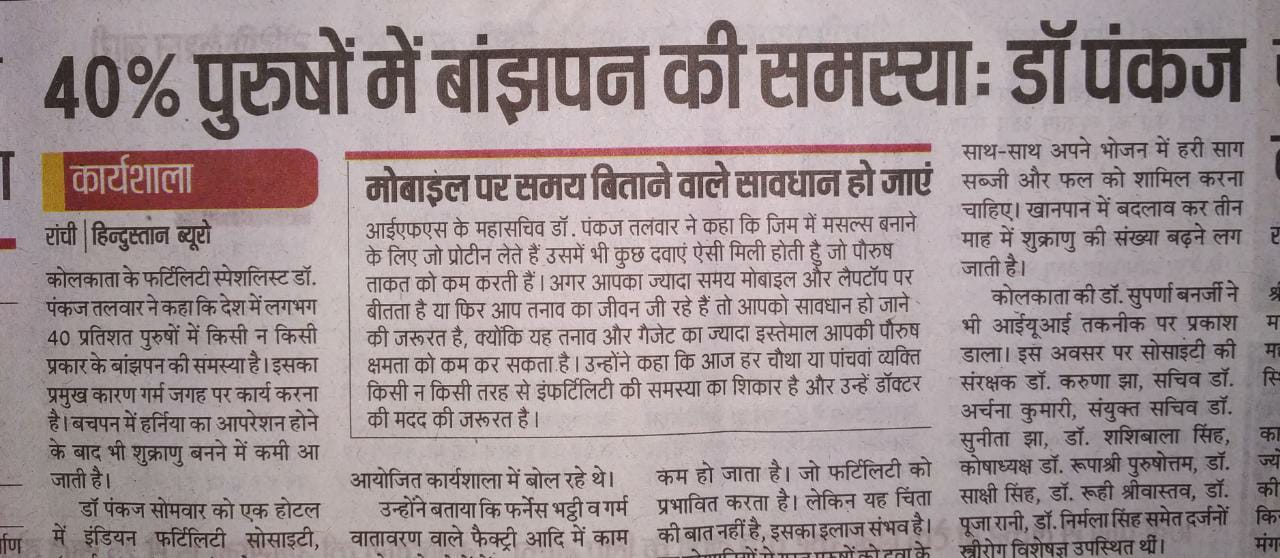
рд╣рд╛рд▓ рд╣реА рдореЗрдВ рд░рд╛рдВрдЪреА рдореЗрдВ рдЖрдпреЛрдЬрд┐рдд рдПрдХ рдлрд░реНрдЯрд┐рд▓рд┐рдЯреА рдХрд╛рд░реНрдпрд╢рд╛рд▓рд╛ рдХреЗ рджреМрд░рд╛рди, рджреЗрд╢ рдХреЗ рдкреНрд░рд╕рд┐рджреНрдз рд╡рд┐рд╢реЗрд╖рдЬреНрдЮ рдбреЙ. рдкрдВрдХрдЬ рддрд▓рд╡рд╛рд░ рдиреЗ рдЖрдЧрд╛рд╣ рдХрд┐рдпрд╛ рдХрд┐ рднрд╛рд░рдд рдХреЗ рд▓рдЧрднрдЧ 40 рдкреНрд░рддрд┐рд╢рдд рдкреБрд░реБрд╖ рдмрд╛рдВрдЭрдкрди рдХреА рд╕рдорд╕реНрдпрд╛ рдХрд╛ рд╕рд╛рдордирд╛ рдХрд░ рд░рд╣реЗ рд╣реИрдВред рдЪреМрдВрдХрд╛рдиреЗ рд╡рд╛рд▓реА рдмрд╛рдд рдпрд╣ рд╣реИ рдХрд┐ рдЗрд╕рдореЗрдВ рдЪрд┐рдХрд┐рддреНрд╕рд╛ рдХрд╛рд░рдгреЛрдВ рд╕реЗ рдЬреНрдпрд╛рджрд╛ рд╣рдорд╛рд░реА рд▓рд╛рдЗрдлрд╕реНрдЯрд╛рдЗрд▓ рдЬрд┐рдореНрдореЗрджрд╛рд░ рд╣реИред
рдХреНрдпреЛрдВ рдмреЭ рд░рд╣реА рд╣реИ рдпрд╣ рд╕рдорд╕реНрдпрд╛?
- рдЧреИрдЬреЗрдЯреНрд╕ рдХрд╛ рдЕрдзрд┐рдХ рдЙрдкрдпреЛрдЧ: рд▓реИрдкрдЯреЙрдк рдХреЛ рдЧреЛрдж рдореЗрдВ рд░рдЦрдирд╛ рдФрд░ рдореЛрдмрд╛рдЗрд▓ рдХрд╛ рдЕрдзрд┐рдХ рдЙрдкрдпреЛрдЧ рдЕрдВрдбрдХреЛрд╖ рдХреЗ рддрд╛рдкрдорд╛рди рдХреЛ рдмреЭрд╛рддрд╛ рд╣реИ, рдЬреЛ рд╢реБрдХреНрд░рд╛рдгреБрдУрдВ рдХреЗ рд▓рд┐рдП рдШрд╛рддрдХ рд╣реИред
- рдЬрд┐рдо рд╕рдкреНрд▓реАрдореЗрдВрдЯреНрд╕: рдорд╕рд▓реНрд╕ рдмрдирд╛рдиреЗ рдХреЗ рдЪрдХреНрдХрд░ рдореЗрдВ рд▓рд┐рдП рдЬрд╛рдиреЗ рд╡рд╛рд▓реЗ рдЕрдирд░реЗрдЧреБрд▓реЗрдЯреЗрдб рдкреНрд░реЛрдЯреАрди рдФрд░ рд╕реНрдЯреЗрд░реЙрдпрдб рд╢реБрдХреНрд░рд╛рдгреБ рдЙрддреНрдкрд╛рджрди рдХреЛ рд╕реНрдерд╛рдпреА рд░реВрдк рд╕реЗ рдмрдВрдж рдХрд░ рд╕рдХрддреЗ рд╣реИрдВред
- рдкрд░реНрдпрд╛рд╡рд░рдгреАрдп рдХрд╛рд░рдХ: рдЧрд░реНрдо рднрдЯреНрдЯрд┐рдпреЛрдВ рдпрд╛ рдлреИрдХреНрдЯреНрд░реА рдореЗрдВ рдХрд╛рдо рдХрд░рдиреЗ рд╕реЗ рдЯреЗрд╕реНрдЯрд┐рдХреБрд▓рд░ рдЯреЗрдореНрдкрд░реЗрдЪрд░ рдмреЭрддрд╛ рд╣реИред
- рддрдирд╛рд╡ рдФрд░ рдиреАрдВрдж: рдорд╛рдирд╕рд┐рдХ рддрдирд╛рд╡ рд╢рд░реАрд░ рдХреЗ рд╣рд╛рд░реНрдореЛрдирд▓ рд╕рдВрддреБрд▓рди рдХреЛ рдмрд┐рдЧрд╛реЬ рджреЗрддрд╛ рд╣реИред
рдЙрдореНрдореАрдж рдХреА рдХрд┐рд░рдг: рдЙрдкрдЪрд╛рд░ рдФрд░ рд░реЛрдХрдерд╛рдо
рдбреЙ. рддрд▓рд╡рд╛рд░ рдХреЗ рдЕрдиреБрд╕рд╛рд░, рдмрд╛рдВрдЭрдкрди рдХреЛрдИ рд▓рд╛рдЗрд▓рд╛рдЬ рдмреАрдорд╛рд░реА рдирд╣реАрдВ рд╣реИред рд╕рд╣реА рдорд╛рд░реНрдЧрджрд░реНрд╢рди рд╕реЗ рдЕрдзрд┐рдХрд╛рдВрд╢ рдорд╛рдорд▓реЛрдВ рдХреЛ рдареАрдХ рдХрд┐рдпрд╛ рдЬрд╛ рд╕рдХрддрд╛ рд╣реИ:
рдЗрди рдмрд╛рддреЛрдВ рдХрд╛ рд░рдЦреЗрдВ рдзреНрдпрд╛рди:
- рдЕрдкрдиреЗ рдЖрд╣рд╛рд░ рдореЗрдВ рдПрдВрдЯреА-рдСрдХреНрд╕реАрдбреЗрдВрдЯреНрд╕ рдЬреИрд╕реЗ рддрд╛рдЬреЗ рдлрд▓ рдФрд░ рд╣рд░реА рдкрддреНрддреЗрджрд╛рд░ рд╕рдмреНрдЬрд┐рдпрд╛рдВ рд╢рд╛рдорд┐рд▓ рдХрд░реЗрдВред
- рд╢реБрдХреНрд░рд╛рдгреБрдУрдВ рдХреА рдХреНрд╡рд╛рд▓рд┐рдЯреА рд╕реБрдзрд╛рд░рдиреЗ рдХреЗ рд▓рд┐рдП рдХрдо рд╕реЗ рдХрдо 90 рджрд┐рдиреЛрдВ (3 рдорд╣реАрдиреЗ) рддрдХ рд╕реНрд╡рд╕реНрде рджрд┐рдирдЪрд░реНрдпрд╛ рдХрд╛ рдкрд╛рд▓рди рдХрд░реЗрдВред
- рд▓реИрдкрдЯреЙрдк рдХреЛ рд╣рдореЗрд╢рд╛ рдЯреЗрдмрд▓ рдкрд░ рд░рдЦрдХрд░ рдЙрдкрдпреЛрдЧ рдХрд░реЗрдВред
- рдмрд┐рдирд╛ рдбреЙрдХреНрдЯрд░ рдХреА рд╕рд▓рд╛рд╣ рдХреЗ рдХреЛрдИ рднреА рд╣рд╛рд░реНрдореЛрдирд▓ рд╕рдкреНрд▓реАрдореЗрдВрдЯ рди рд▓реЗрдВред
рдкрд░рд╛рдорд░реНрд╢ рдХреЗ рд▓рд┐рдП рд╕рдВрдкрд░реНрдХ рдХрд░реЗрдВ
рдкрд┐рддреГрддреНрд╡ рдХреА рдУрд░ рдЕрдкрдирд╛ рдкрд╣рд▓рд╛ рдХрджрдо рдмреЭрд╛рдПрдВред рдбреЙ. рдкрдВрдХрдЬ рддрд▓рд╡рд╛рд░ рд╕реЗ рд╡реНрдпрдХреНрддрд┐рдЧрдд рдкрд░рд╛рдорд░реНрд╢ рдХреЗ рд▓рд┐рдП рдиреАрдЪреЗ рджрд┐рдП рдЧрдП рдирдВрдмрд░ рдкрд░ рдХреЙрд▓ рдХрд░реЗрдВред
ЁЯУН рдЧреБрд░реБрдЧреНрд░рд╛рдо | рдирдИ рджрд┐рд▓реНрд▓реА
Ovarian reserve is a medical term used to describe the quantity and quality of oocytes (eggs) a woman has at any given time. Think of it as a “fertility bank account.” As a woman moves through her reproductive years, this balance naturally declines, but for some, the decline happens faster than expected.
1. What is Decreased Ovarian Reserve (DOR)?
Decreased ovarian reserve means your ovaries have a lower-than-average number of eggs compared to other women of your age. Clinically, it is diagnosed using two main markers:
- AMH (Anti-M├╝llerian Hormone): A value below 0.5 – 1.1 ng/ml is often indicative of low reserve.
- AFC (Antral Follicle Count): During an ultrasound, seeing fewer than 5 to 7 follicles suggests a reduced egg pool.
2. Why Does Egg Count Decline?
Aging is the natural and irreversible cause, but certain factors can accelerate the loss:
- Medical History: Pelvic infections or endometriosis (Endometrioma).
- Surgeries: Previous ovarian surgeries that may have removed healthy tissue.
- Treatments: Chemotherapy or radiotherapy.
- Lifestyle & Genetics: Genetic predispositions can lead to early menopause.
3. The Challenges and Reality
Low ovarian reserve does not mean you cannot conceive, but it does mean that time is of the essence. It is associated with:
- Lower response to fertility medications.
- Higher risk of pregnancy loss due to declining egg quality.
- Reduced success rates in simple treatments like IUI.
4. Best Treatment Strategies
For women with DOR, IVF (In-Vitro Fertilization) offers the highest probability of success. At our center, we prioritize the Antagonist Protocol, which is tailored to maximize the retrieval of every available healthy egg.
In cases where multiple IVF attempts do not yield results, we offer compassionate counseling for alternative paths like Oocyte (Egg) Donation or adoption to help you complete your family.
Timing is Everything in Fertility
If you are worried about a low egg count, a simple AMH test can provide the answers you need. Consult Dr. Pankaj Talwar today.
ЁЯУН 3118, 3rd Floor, Sector 46, Near Ambedkar Chowk, Gurugram, Haryana